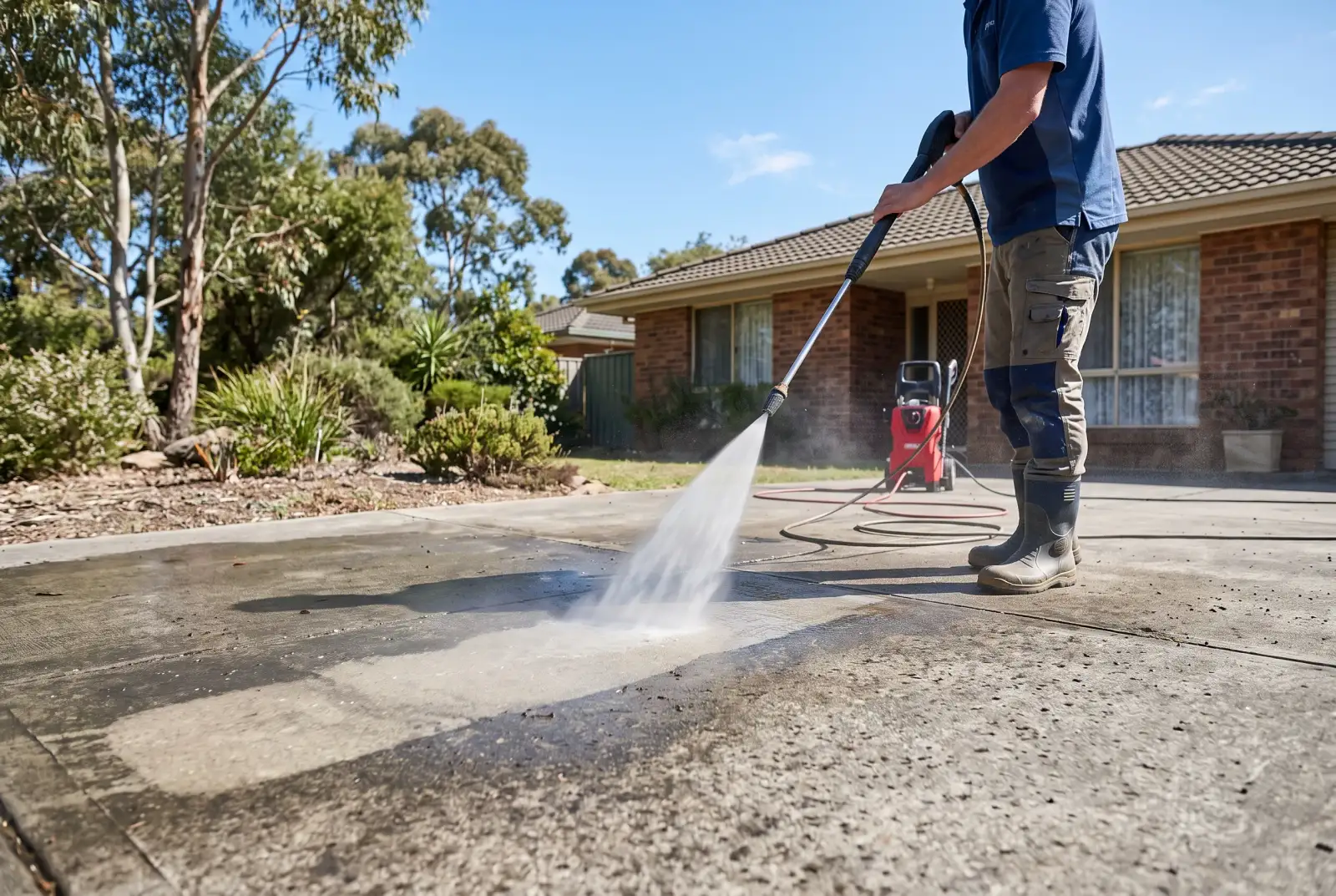
Concrete is tough, but it is also porous, which means oil, rust, mould and tyre marks can sink in and stick around if you leave them. The good news is that most stains come out with the right product and a bit of patience — and a sealed surface makes the whole job far easier. Here is how we clean concrete and shift the common stains across the Adelaide Hills, where shaded, damp driveways throw up their own challenges.
How do you clean concrete the right way?
Start with the gentlest method and only step up if you need to. Most concrete only needs sweeping, a hose-off and a mild detergent — harsh chemicals and brute force are for stubborn stains, not routine cleaning. A simple routine keeps a driveway looking good for years:
- Sweep regularly. Grit, leaf litter and organic debris hold moisture against the surface and feed mould. Keeping it swept is the single easiest thing you can do.
- Hose it down. A good rinse shifts surface dust and stops dirt grinding into the pores.
- Wash with mild detergent. For general grime, a bucket of warm water with a squirt of dishwashing liquid or a pH-neutral concrete cleaner, worked in with a stiff broom (not a wire brush), lifts most everyday muck. Rinse thoroughly so no residue is left to attract dirt.
Do this a couple of times a year and you will rarely need anything stronger.
Pressure washing: do's and don'ts
A pressure washer is the fastest way to clean a large driveway, but it is also the fastest way to ruin a decorative surface if you are heavy-handed. The aim is to lift dirt, not gouge the concrete.
- Do use a wide fan tip (25 to 40 degrees), not a pencil-thin zero-degree nozzle that can etch lines into the surface.
- Do keep the nozzle moving and hold it back from the surface — start a good 30 cm away and only move closer if needed.
- Do work in even, overlapping passes so you do not leave clean stripes and dirty stripes.
- Don't blast exposed aggregate or other decorative finishes up close — you can strip the surface paste and dislodge stones. Use lower pressure and more distance.
- Don't drive the lance hard against control joints or crack edges, where the force can chip and worsen damage.
If you are cleaning exposed aggregate or coloured concrete, err on the side of gentleness — it is easy to do more harm than the stain itself. When in doubt, test a small out-of-the-way patch first.
Removing specific stains
Different stains need different chemistry. Matching the product to the stain is the difference between a clean slab and a faint shadow that never quite lifts.
Oil and grease
Tackle oil with a degreaser, and tackle old, soaked-in oil with a poultice. For fresh spills, sprinkle cat litter or bicarb soda to soak up what you can, then sweep it away. Apply a concrete degreaser, let it dwell, scrub with a stiff brush and rinse. For stains that have been there a while, a poultice — a paste of degreaser or solvent mixed with an absorbent like talc or sawdust, spread over the stain, covered with plastic and left to draw the oil back out over a day or so — works far better than surface scrubbing because it pulls the oil up out of the pores.
Rust
Rust responds to an oxalic-acid-based rust remover rather than a general cleaner. You will see rust where reo, steel furniture, fertiliser or bore water has stained the surface orange-brown. A purpose-made oxalic-acid concrete rust remover, applied as directed and rinsed well, lifts most of it. Avoid hydrochloric (pool) acid on decorative concrete — it strips colour and surface paste.
Mould, lichen and moss
This is the classic Adelaide Hills problem: shaded, tree-lined driveways stay damp and grow green and black growth. Treat it with a dedicated mould and lichen killer or a diluted oxygen-bleach solution, let it sit so it can actually kill the spores, then scrub and rinse. Avoid chlorine bleach on coloured surfaces. The long-term answer is improving drainage and light where you can, and sealing the surface so moisture has less to cling to.
Tyre marks and paint
Tyre scuffs and hot-tyre pickup usually need a degreaser and a firm scrub, sometimes more than one go. For paint, scrape off what you can once it is dry, then use an appropriate paint stripper sparingly, testing first on decorative finishes. Patience beats aggression here — repeated gentle treatments beat one harsh one that damages the surface.
Efflorescence (the white, chalky bloom)
That powdery white film is not really a stain — it is efflorescence, salts brought to the surface by moisture moving through the concrete. It is most common on newer slabs and in damp, shaded spots. A light bloom often weathers off on its own or brushes away dry. For heavier deposits, a dedicated efflorescence remover does the job. Resist the urge to reach for strong acid; it can etch the surface and actually draw more salts up later. Because efflorescence is driven by moisture, the lasting fix is managing water and sealing once the slab has fully dried out.
How to tackle a badly stained driveway, step by step
When a whole driveway has gone grey-green and grubby, work through it methodically rather than attacking the worst patch first. A staged approach gets a better, more even result and avoids damaging the surface:
- Clear and sweep. Move everything off the slab and sweep away all loose debris, leaves and grit so your cleaners can reach the concrete.
- Pre-wet the surface. Hosing the concrete first stops it drinking the cleaning solution straight into the pores and helps the product spread evenly.
- Spot-treat the heavy stains. Hit oil with degreaser, rust with an oxalic remover and mould with a lichen killer, letting each dwell before you scrub. Deal with these before the general wash.
- Wash the whole slab. Apply a pH-neutral concrete cleaner over the lot and work it in with a stiff broom so the colour and cleanliness come up evenly.
- Rinse thoroughly. Flush everything off, working from the high side downhill so dirty water and residue run off the slab, not back across the clean area.
- Let it dry, then assess. Once dry you will see what remains. Repeat spot treatments as needed, and only once it is clean and fully dry should you consider resealing.
Taking it in this order means you are not chasing dirty runoff around the slab or sealing grime in place.
Cleaning across the seasons and the regions we work
The best time to clean and reseal is warm, dry weather, because chemicals work better and sealers need a dry slab to bond. Across the Adelaide Hills, the cool, damp, tree-shaded conditions mean mould and lichen are the year-round battle, and autumn leaf fall is the main culprit feeding it — a good clean heading into spring sets a driveway up well. Out in drier country like the Riverland and the Mid North, it is bore-water rust marks, dust and the occasional oil spill that tend to dominate rather than green growth. Whatever the region, do not seal a slab that is still wet from cleaning or recent rain, and avoid cleaning in the heat of a scorching day when products flash off before they can work. Timing the job to the conditions makes the whole exercise easier and the results last longer. The same dry-weather logic applies to bigger jobs too, which is why our note on the best time of year to pour concrete in South Australia is worth a look if you are planning any new work.
Why sealing makes cleaning easier
A sealed surface keeps stains on top instead of letting them soak in, so they wipe and rinse away far more easily. Unsealed concrete is porous, and porous concrete drinks up oil, rust and organic staining. A quality penetrating or topical sealer fills those pores, gives you a window to clean up spills before they set, and helps resist mould by shedding water. Sealing also keeps colour looking richer for longer, which matters if you have invested in a decorative finish — see our rundown of coloured concrete options for SA homes and our ideas piece on concrete driveway design for what a well-kept finish can look like. Sealers do wear and need refreshing every few years, especially on a hard-working concrete driveway, so build it into your maintenance plan.
What not to use
The wrong cleaner can do permanent damage that no amount of scrubbing will reverse. Keep clear of these:
- Strong acids on decorative concrete. Hydrochloric or muriatic acid strips colour, etches the surface and dulls exposed aggregate. Save aggressive acids for plain, sound concrete and only as a last resort.
- Wire brushes and metal scrapers on finished surfaces. They scratch sealers and gouge decorative paste, leaving marks worse than the stain.
- Zero-degree pressure-washer tips. They cut into the surface and leave visible tracks.
- Chlorine bleach on coloured concrete. It can lighten and blotch the colour.
- Letting any chemical dry on the surface. Always rinse thoroughly — residue attracts dirt and can discolour.
When a stain is really telling you something else
Sometimes what looks like a stain is actually the surface wearing out. Persistent dark patches that will not lift, flaking or a powdery, pitted surface can be spalling — where the top layer is breaking down from age, freeze patterns, salt or a poor original finish. No cleaner fixes that, because the concrete itself is failing rather than just being dirty. If cleaning reveals crumbling edges or cracks, that is a maintenance issue worth a closer look; our guide to deciding on concrete crack repair or replacement walks through the options. If you are out in the Riverland or anywhere we work and a clean-up has uncovered something more serious, drop us a line via the contact page and we will take a look. For guidance on what a sound surface should cost to replace, our concrete driveway cost guide is a useful starting point.
Frequently asked questions
How do I get oil stains out of concrete?
For a fresh spill, soak up as much as you can with cat litter or bicarb soda, then apply a concrete degreaser, scrub with a stiff brush and rinse. For an old, soaked-in stain, a poultice works best: mix degreaser or a solvent with an absorbent powder into a paste, spread it thickly over the stain, cover it with plastic and leave it for a day or so to draw the oil back out of the pores, then scrub and rinse. Deep stains may need a couple of rounds. A sealed driveway makes oil far easier to remove because it never soaks in to begin with.
Is pressure washing safe for exposed aggregate?
Yes, if you are gentle. Exposed aggregate can be pressure washed, but use a wide fan tip, keep the pressure moderate and hold the nozzle well back — a close, high-pressure blast strips the surface paste and can dislodge the stones, which ruins the finish. Test a small area first, keep the lance moving in even passes, and never use a zero-degree tip. For routine cleaning, a hose and a stiff broom with mild detergent is often all an exposed-aggregate surface needs, and keeping it sealed reduces how often you have to clean it at all.
How often should I clean and reseal my driveway?
Give it a sweep and a wash a couple of times a year, more often if it sits under trees where leaf litter and mould build up. Resealing depends on traffic and exposure, but a typical residential driveway benefits from a fresh coat every few years — sooner if water has stopped beading on the surface. Staying on top of both keeps stains from ever getting a foothold and keeps the concrete looking close to new.