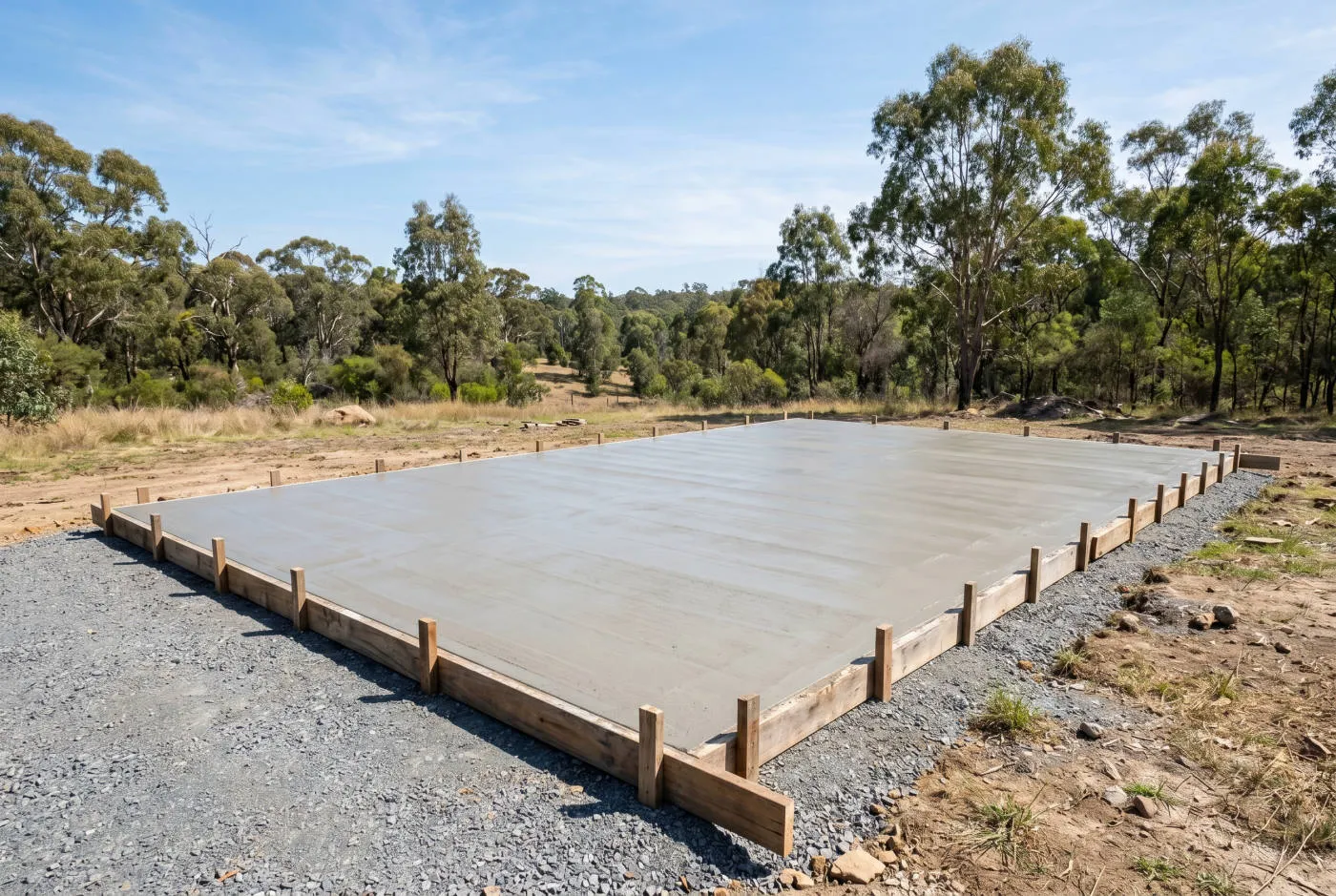
Whether it's a shed slab or a driveway, a smooth pour day comes down to preparation. Most of it is our job — but a few things on your end help it run like clockwork.
Clear access for the concrete truck
Agitator trucks are big and heavy. Clear vehicles, bins and low branches from the access route, and let us know about soft ground, narrow gates or steep driveways so we can plan pumping if needed.
Confirm levels and set-out early
Final floor levels, set-downs for plumbing, and where the slab meets paths or the house all need to be locked in before we form up. If a builder is involved, we coordinate this with them.
Sort the groundwork
The pad needs to be cut, levelled and compacted. We offer earthmoving and site prep so the base is done right by the same crew that pours — no coordinating two contractors.
Plan around the weather
Extreme heat affects curing. In an Adelaide summer we time pours and cure the slab properly so it gains strength and resists surface cracking.
What we handle
- Formwork, steel and reinforcement to spec
- Base preparation and compaction
- The pour, finish and curing
- Clean-up and joint cutting
In short: tell us about access and timing, and leave the technical side to us.
Common mistakes to avoid before pour day
- Not locating services — know roughly where power, water, gas and stormwater run before any excavation. Contact Dial Before You Dig well ahead.
- Moving the date late — concrete and crews are booked in; a last-minute change can push you back significantly.
- Cluttered access — agitator trucks are wide and tall; clear vehicles, bins and low branches from the route in advance.
- Leaving levels undecided — lock in finished floor levels and any set-downs before we form up.
Coordinating with your builder
On a new build, shed or extension, the pour is a key milestone. We coordinate floor levels, set-downs and the slab position with your builder so everything ties together and there's no costly rework later. A short conversation between us and the builder up front saves a lot of headaches down the track — it's one of the quiet advantages of using an experienced slab crew.
Weather and timing in our region
Adelaide summers are hot, so on very warm days we time pours sensibly and cure carefully to avoid rapid surface drying and cracking. In the Adelaide Hills and Riverland we also watch for frost and heat extremes and plan around them. We pour year-round — we simply adjust method and curing to the conditions. Questions before your pour? Get in touch and we'll walk you through it.
A simple pre-pour checklist
- Confirm the date and keep it clear — concrete and crews are booked in advance.
- Clear vehicles, bins, materials and low branches from the truck's access route.
- Know roughly where power, water, gas and stormwater services run.
- Lock in finished floor levels and any plumbing set-downs with your builder.
- Make sure pets and kids can be kept well clear of wet concrete on the day.
- Tell us about soft ground, steep access or anything that might affect delivery.
What happens on pour day
On the day, the crew arrives early to make final checks to the forms, base and reinforcement. The concrete is delivered (and pumped if access requires it), then placed, screeded and floated to level. Depending on the finish you've chosen, it's then broomed, coloured or washed back for exposed aggregate. Once it has set enough, we cut the control joints and begin curing. It's a busy, well-timed sequence — which is why having access clear and decisions locked in beforehand makes such a difference.
After the pour: curing and first use
Fresh concrete keeps gaining strength for weeks. As a rule of thumb, foot traffic is usually fine after a couple of days and vehicles after about a week, though we'll give you specific timing for your slab and the weather. Keep heavy loads off until it's ready, and if you've chosen a decorative finish, we'll let you know when it's right to seal. Look after it in those first few weeks and your slab or driveway will reward you for decades.
Why preparation pays off
None of this prep is complicated, but it makes a real difference on the day. A pour that runs smoothly — clear access, levels locked in, services known, weather accounted for — produces a better, more consistent finish than one interrupted by surprises. It also keeps the job on schedule, which matters when concrete and crews are booked in advance. Spend a little time getting the site and the decisions sorted beforehand, leave the technical work to an experienced crew, and you set your driveway or slab up to perform for the long haul. If you'd like a hand thinking it through, get in touch — we're happy to walk the site with you before pour day. A short conversation up front about access, levels and timing is the simplest way to make sure your pour goes smoothly and your finished concrete is something you'll be glad you invested in for many years to come.
Access in detail — the thing most often underestimated
Concrete arrives in a heavy agitator truck, and getting it to the pour is frequently the trickiest part of the day. These trucks are wide, tall and very heavy, so soft lawns, narrow gateways, tight bends, low branches and overhead wires all matter. Where a truck can't get close — common on steep Adelaide Hills blocks and long rural driveways around Morgan — we plan to pump the concrete or barrow it, which we'll factor into the quote if we know in advance. The more you can tell us about access, ground conditions and obstacles up front, the smoother and faster the pour runs, and the better the finish, because concrete that's placed steadily finishes more consistently than concrete that's fighting the site.
A typical pour-day timeline
It helps to know roughly what the day looks like. The crew arrives early to make final checks to the formwork, base and steel. The first truck arrives and the concrete is placed and spread, then screeded off to the right level and falls. As it firms up it's floated, then finished in your chosen finish — broomed, coloured or washed back for exposed aggregate. Once it has set sufficiently, control joints are cut and curing begins. It's a tightly-timed sequence that can't be paused once the concrete is on the ground, which is exactly why having access clear and decisions locked in beforehand makes such a difference.
Looking after it in the first few weeks
The job isn't quite done when the crew leaves. Keep foot traffic off for a day or two and vehicles off for about a week (we'll give you exact timing). Keep heavy or sharp loads off new concrete, don't let sprinklers or downpipes blast the fresh surface, and if you've chosen a decorative finish, wait until we advise before sealing. These first weeks are when the slab is gaining most of its strength, so a little patience pays off in a driveway or slab that performs for decades.
Common questions about preparing for a pour
How much notice do you need? The earlier the better — it lets us book supply and pick a good-weather day. Do I need to do the excavation myself? No — we handle site prep, and offer earthmoving where the ground needs more work. What if it rains on the day? We monitor the forecast and will reschedule rather than pour into bad weather. Can I be away during the pour? Ideally be available by phone for any quick decisions, but we can manage the day once levels and details are agreed.
The bottom line
A great slab is mostly won before the truck arrives. Clear access, locked-in levels, known services, the right weather window and a few sensible decisions made early are what turn pour day into a smooth, well-timed sequence rather than a scramble. None of it is complicated, and most of the technical side is our job — your part is really just getting the site and the timing sorted and telling us about anything that might affect access. Do that, leave the rest to an experienced crew, and your driveway or slab will be set up to perform for decades. Get in touch and we'll help you plan it out.