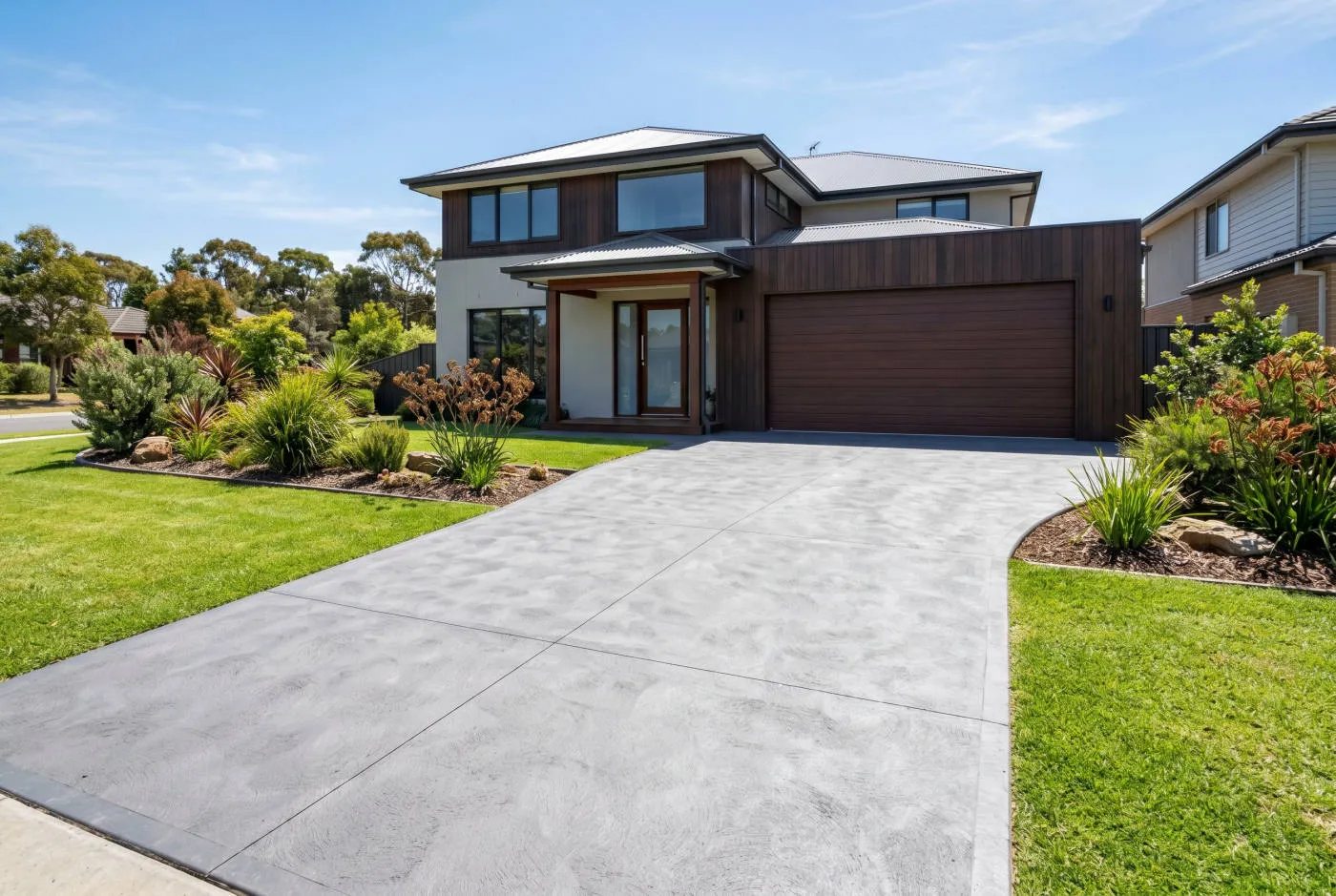
Once the truck has gone and the finish looks great, it is natural to want to start using your new slab straight away. But fresh concrete is still soft, and rushing it is one of the easiest ways to ruin an otherwise perfect pour. Here is how concrete gains strength, the difference between curing and drying, and a realistic timeline for walking on, driving on and sealing new work.
Curing is not the same as drying
People often use the words interchangeably, but they describe two different things. Concrete does not harden by drying out — it hardens through a chemical reaction between cement and water called hydration. That reaction needs moisture to keep going. If concrete dries too quickly, the reaction stops early, and you end up with a weaker, dustier, more crack-prone surface. Curing is the art of keeping that moisture in the slab long enough for it to reach proper strength. In short, you want concrete to stay damp while it cures, not to dry as fast as possible.
The strength timeline
Concrete gains strength quickly at first, then more slowly over weeks. As a rough guide for a typical residential mix:
- 24 to 48 hours: the surface is hard enough to walk on carefully. Keep pets, kids, bikes and furniture off it.
- 7 days: the slab has reached roughly three-quarters of its design strength. Light foot traffic is fine.
- 7 to 10 days: a residential driveway is usually ready for the family car, provided the weather has been reasonable.
- 28 days: concrete is considered to have reached its full design strength. Heavy vehicles, caravans, trailers and loaded trucks should wait until now.
These are guides, not guarantees. Cold weather slows the reaction right down, so a winter pour in the Adelaide Hills takes longer to reach the same point than the same slab poured in mild spring conditions. When we hand over a job, we give you timing advice specific to your slab and the weather we poured it in.
Why the South Australian climate matters
Our conditions pull in two directions. A hot, dry, windy day around Morgan or out through the Mid North can dry the surface far faster than the slab cures, causing surface crazing and dusting if it is not protected. A cold, damp Hills winter does the opposite, slowing hydration so the slab takes longer to be usable. Good concreting is about reading those conditions and adjusting — timing the pour for the cooler part of the day in summer, and protecting and curing the slab properly whatever the season. This is also why pour timing is worth planning rather than leaving to chance.
How we cure your concrete
Curing is one of the least glamorous parts of the job and one of the most important. Depending on the slab and the weather we use methods such as curing compounds sprayed onto the fresh surface, covering with plastic to hold moisture in, or keeping the surface damp. The aim is always the same: keep the water in the slab so hydration can finish the job. A driveway that has been cured well will be stronger, more resistant to surface wear, and far less likely to dust or craze than one left to dry in the sun.
What you should and should not do while it cures
You can help your new concrete reach its best by giving it time and a little care in the first few weeks:
- Keep heavy loads off until at least 28 days — this is the single most common cause of early cracking we get called about.
- Do not let sprinklers, downpipes or pooling water constantly soak one area, and do not park on it before the timeframe we give you.
- Avoid dragging skip bins, trailer jockey wheels or furniture across the fresh surface, which can gouge or stain it.
- In very hot weather, a light misting can actually help in the first day or two — we will tell you if your slab needs it.
When can I seal it?
Sealing is a separate question again. Most decorative finishes, such as exposed aggregate and coloured concrete, are sealed once the slab has cured and dried out enough for the sealer to bond — often a few weeks after the pour, depending on the product and the weather. We handle sealing of decorative work as part of the job and advise on re-sealing down the track. For a deeper look at how we build slabs to last, see our notes on thickness, slope and drainage, or read the driveway cost guide before you start. When you are ready, get in touch for a free quote and we will walk you through realistic timing for your project.
Curing in the South Australian climate
Our climate makes curing especially important. In a hot, dry, windy Adelaide summer, fresh concrete can lose surface moisture far too quickly, which weakens the top layer and invites surface crazing — so on warm days we time pours sensibly and protect the slab as it cures. In the cooler months concrete gains strength more slowly, so we simply allow a little more time before it takes load. Either way the goal is steady, controlled curing so the slab reaches full strength. This matters as much on a steep Adelaide Hills driveway as it does on a rural Morgan shed slab.
The takeaway on curing and drying
Don't rush it. Light use after a couple of days and vehicles after about a week is the usual rule of thumb, but concrete keeps strengthening for weeks, and decorative finishes shouldn't be sealed until the slab has dried enough. Give it that time and a well-built slab will serve you for decades.
Curing versus drying — they are not the same
People often use "curing" and "drying" to mean the same thing, but they describe two different processes, and understanding the difference explains a lot about why timelines vary. Curing is a chemical reaction called hydration, where cement and water combine to build strength — it needs moisture to keep going, which is why we want to keep a fresh slab from drying out too fast. Drying is the slow loss of excess moisture from the slab afterwards, and it matters mostly for finishes like sealers, coatings or floor coverings that won't bond properly to concrete that is still releasing moisture. A slab can be cured and strong while still being too "wet" internally to seal. That is why we time sealing of a decorative exposed aggregate or coloured driveway for a few weeks after the pour rather than straight away.
What speeds up or slows down curing
Several things influence how quickly a slab gains usable strength. Temperature is the big one — warmth accelerates the reaction, cold slows it right down, which is why a winter slab in the Adelaide Hills takes longer before it can take load than the same slab poured in spring. Humidity and wind matter too: hot, dry, windy days pull moisture from the surface fast, risking crazing, so we protect against that. The concrete mix itself plays a part, as higher-strength mixes and certain additives change the timeline. None of this changes the fundamentals for a homeowner — it just means an experienced crew reads the conditions and adjusts rather than applying a one-size-fits-all rule.
How we cure your slab properly
Good curing is mostly about keeping moisture in the slab through the critical early days. Depending on the job and the weather, that can mean covering the slab, applying a curing compound, or keeping the surface damp. It is not glamorous work, but it is one of the biggest differences between a slab that stays hard and crack-controlled for thirty years and one that dusts, crazes or weakens at the surface within a couple of seasons. Because we pour right across a range of climates — from the cool, damp Hills to hot, dry Morgan and the Mid North — we treat curing as part of the job, not an afterthought.
Common questions about curing and drying
Can I park on it after a week? Usually yes for a normal car, but we'll confirm for your slab and the weather. Why is my new concrete still darker in patches? That's normal moisture variation as it dries and it evens out over time. When can I seal it? Generally a few weeks after the pour, once it has dried enough for the sealer to bond — we'll tell you when. Does rain ruin fresh concrete? Light rain after it has set is usually fine and can even help curing; heavy rain on a fresh, unfinished surface is the problem, which is why we plan pours around the forecast.